How-Tos

Melony Bradley created these delightful dyed napkin rings for the May/June issue of Somerset Life, published by Stampington & Company.  The unfinished wooden bird shapes were dipped in trendy custom colors created from dye recipes in the Rit Color Formula Guide.  For added interest, decorative ribbons and buttons were added as embellishments.

To create the custom colors, Melony followed the custom dye recipes for Peach #115 ( Yellow-Orange palette), Blue Curacao #565 (Blue-Green palette), Orange/Peach #463 (Yellow-Orange palette) and Orange #96 (Orange palette) by mixing small amounts of dye in 1 cup of hot water.  Then she poured the dye into plastic bags and immersed the bird shapes, napkin rings, and wings into the various dye colors for 15 – 20 minutes.  After they dried, Melony stamped designs on the birds and sealed them with polyurethane.  It’s so easy and so much fun!  For the full tutorial, click here

Living in a small town in south Georgia, Melony has been designing full-time for the creative industry since 2004. Her work has been published in national consumer craft and lifestyle magazines, including Women's World, Cloth Paper Scissors, Crafts’ n Things, Create & Decorate, Green Craft Magazine, Altered Couture and Somerset Life, Sew Somerset and Somerset Gallery. Hope over to her blog to see her colorful creative projects.

www.mel-designs.typepad.com


Tags: How-Tos
Dianne

Looking for a fun tie-dye project?  Check out this video by Vanessa at The Crafty Gemini.

In this video Vanessa demonstrates how to wrap up a pair of white leggings and dye them with Rit.  Be sure to enter her Rit GiveAway as well.

In this video tutorial Vanessa teaches you how to take a pair of white leggings and tie-dye them using Rit dye to add a funky pair of custom leggings to your wardrobe. This is a beginner project and kid friendly.


You don't need any fancy equipment to dye your clothes. The supplies you will need for this method of tie dyeing are:

• Plastic drop cloth to protect work surface

• Gloves

• Rubber bands

• Garment you will dye

• Hot water

• Bowl or container for dye bath

• Rit dye in color of your choice

• Salt (optional)

• Tiny bit of dishwashing soap (optional)


In this DIY tie-dye leggings tutorial she shows one way of dyeing garments. Feel free to play around with rubber bands, knots, paintbrushes, etc to get different dyeing effects on your projects. It's so much fun!

Note:  For darker colors, use more dye and allow the tied leggings to remain in the dye bath for 20 to 30 minutes!


Watch the video for details on how to enter the giveaway! Giveaway is open to all international viewers. The entry period will end on Wednesday, May 15, 2013 at 11:59PM EDT. Winner will be announced in a future video. Good luck! 

Be sure to visit Vanessa’s blog at www.craftygemini.com


Tags: How-Tos

Here’s a last-minute Mother’s Day gift you can make for someone you love!  Carla created this wall art sachet by dye-staining a wood shadow box to house a heart she dyed and then stuffed with fiberfill and dried lavender. So it’s sure to smell good all year long.  As a finishing touch, you can add a special hand-written message.

To get started, Carla hand-dyed one piece of cotton fabric and twine in Fuchsia dye.  Then she dyed a second piece of fabric and cotton twine in Sunshine Orange.  The wood shadow box was dye-stained using Aquamarine dye.  Then she cut a piece of chipboard to fit in the bottom of the shadow box and covered it with the Fuchsia dyed fabric and glued the Sunshine Orange twine around the perimeter.  The heart shape was cut from the Sunshine Orange fabric.  Then Carla hand-stitched around the edge of the heart with Aquamarine dyed twine, gathered it and stuffed it with fiberfill and lavender sachet, and glued it in the shadow box.  The flower was formed from the dyed twine.  Using a dark brown ink pen, she wrote “Happy Home, Happy Heart” on cardstock.  Click here for the full tutorial. 

Carla Schauer is an independent designer, licensed artist and a lover of color and patterns. Her designs include memory art, 3-dimensional crafts, scrapbooking, card making, mixed-media art and home decor. Carla also creates surface art for licensing. Her work can be seen at her website, www.carlaschauer.com and on her blog http://carlaschauer.com/carla-schauer-blog-whats-new/.


Tags: How-Tos

With assistance from an older sibling or family friend, here’s a fun keepsake that a child could make for Mother’s Day!  Barbara Warholic dipped a child’s hands into Elmer’s School Glue Gel (the blue one) and then pressed them onto fabric.  The glue acts as a resist when the fabric is dyed, leaving a keepsake handprint for framing!     

Here’s the fun part for the child.  Pour about 1/4 cup Elmer’s School Glue Gel on a paper plate

and have the child put his or her palms into the glue.  Then lay a piece of white cotton fabric over  freezer  paper. Ask the child to firmly press their hands onto the center of the fabric, making sure that there is a good glue imprint of each hand.  Then write or print the child’s name under the handprints.  Allow glue to dry completely (overnight is best).  To dye the handprint fabric, Barbara prepared a dyebath of Aquamarine and Royal Blue and immersed the fabric in the dyebath for about 5 minutes.  Then rinse in cold water; wash in warm soapy water until the glue has been washed away.  Dry and iron the fabric.  The batik-like handprints are ready to be framed into a keepsake that will be cherished forever!  Click here for the full tutorial.

Barbara Warholic is a designer and author of Sewing Pottery By Machine, published by Martingale. She loves incorporating Rit dye into her work.  Visit her blog at www.softpottery.blogspot.comand her Dyeing Textiles board on www.pinterest.


Tags: How-Tos

Have you ever painted the walls in your home a custom color and then couldn’t find switch wallplates to coordinate? Well, our friend, Barbara Warholic, found an easy solution to this dilemma. She discovered that switch wallplates are made of unbreakable nylon and they can be dyed with Rit. Just imagine the color possibilities!

Barb selected custom color recipes from the Rit Color Formula Guide.  Then, she washed the switch plates in warm soapy water before dunking them in the dye.  As a reminder, make sure that the switch wallplates are made of nylon. Wallplates are available in other materials, but only nylon can be dyed. For her dye bath, she used 1 cup very hot water and then followed the custom recipe.  Then the switch wallplate and screws were immersed into the dye mixture. (Barb’s screws took the dye.)  Allow the switch plate and screws to soak in the dye solution for up to 10 minutes.  Check the switch plate often in natural light to see how the color is progressing. The switch plate will be slightly darker when it dries completely.   This is so easy and so much fun … the color possibilities are endless! Just think of the color burst it can add to a kid’s room, and it works for outlet plates as well. Click here for the full tutorial and custom recipes.

Barbara Warholic is a designer and author of Sewing Pottery By Machine, published by Martingale. She loves incorporating Rit dye into her work.  Visit her blog and her Dyeing Textiles board on Pinterest.


Tags: How-Tos

Learn how easy it is to dye your jeans any color you can imagine with Rit Dye!  The bucket or dishpan method of dyeing makes it so easy and helps you get just the color you like, right out of the bottle.  Or, you can mix several dye colors together to create your own custom color.  It’s fun, easy and great to do with friends!

Dianne, our Crafts & Education Director, and Rebecca, our SVP Color Inspiration & Creativity, team up to show you how.

Supplies Needed

  • Rit Purple Liquid Dye
  • White Jeans, 100% Cotton 
  • 4-Cup Measuring Cup & Measuring Spoons
  • Spoon for stirring dye
  • 4-Gallon Container for Dyeing 
  • Fabric Scrap for testing dye color
  • Salt
  • Dishwashing Liquid
  • Rubber Gloves
  • Paper Towels
  • Plastic Table Cover

Instructions

1.  Prewash jeans to remove any finishes that may interfere with dye absorption. 

2.  Fill dishpan or bucket with 3 gallons very hot tap water (140° F).  Note:  If water is not hot enough, heat some water in a tea kettle or in the microwave. 

3.  Estimate the weight of your dry jeans. (If possible, use a food scale.)  These jeans weighed 14 ounces.  As a guideline, ½ cup (half bottle) of liquid dye will color up to 16 ounces of dry weight fabric.  To achieve a dark, more intense color, we suggest doubling the dye so we used 1 bottle of dye.

4.  Dye Preparation:  Wearing rubber gloves, shake dye bottle and pour into the water.  Then measure 1 cup of salt; dissolve with 2 cups very hot water and stir well.  Add to dyebath. 

5.  Add squirt of dishwashing liquid and stir well.


6. Test dye color to be sure you are satisfied. Note: If color is too light, add more dye. If color is too dark, add more water.

7. Wet jeans in warm water and squeeze out excess water.

8.  Immerse jeans in dye bath and stir continuously for 20 minutes, then occasionally for 10 minutes or until desired color is achieved (up to one hour).  The longer the jeans remain in the dye bath, the darker the color will be. (Color will appear lighter when dry.)  Stirring helps to ensure an even color.

9.  Remove jeans from dye bath and squeeze out excess dye.  Rinse in cold running water until water begins to run clear.  Then wash jeans in warm water with mild detergent, rinse, dry and iron.


Tags: How-Tos


In this video, you’ll see how easy it is to create a dip-dyed Ombreꞌeffect on an embroidered lampshade and terry cloth towels turned into fun pillows!  Ombreꞌis a French word meaning “to shade” and describes a gradual change in color from light to dark. The overall effect makes you feel like an artist has dipped and shaded the colors by hand.  

Dianne, our Crafts & Education Director, and Rebecca, our SVP Color Inspiration & Creativity, team up to show you how.

Supplies Needed

  • Rit Denim Blue Liquid Dye
  • 4 White 100% Cotton Better Homes and Gardens Hand Towels, 16” x 26”
  • 16” x 16” Fairfield  Poly-Fil Soft Touch Pillow Form
  • 18” x 24” Small Pillow Form
  • White Embroidered Better Homes and Gardens Mod Drum Shade, 10” dia x 7” H
  • Sewing Thread, Navy Blue
  • Hand Sewing Needle
  • Scissors
  • Straight Pins
  • Sewing Machine
  • Dyeing Supplies:  Measuring Cup & Measuring Spoons, 4 Gallon Container for dyeing,

Stirring Spoon, Dowel Rod, Scrap Fabric for testing dye color, Salt, Dishwashing Liquid, Rubber Gloves, Paper Towels, Masking Tape, Plastic Table Cover

Dyeing Lampshade

Note:  Both the towels and the lampshade were dyed in the same dye bath.  If desired, dying can be done separately.

1.  Before starting to dye, check dyeing container to be sure the lampshade will fit.  Check depth to see how deep dye bath must be and where it will hit on the lampshade.  Mark desired depth with masking tape.

2.  Prepare dye bath:  Fill dye container with 4 gallons very HOT tap water (about 140F).  If water is not hot enough, heat some in a cook pot or tea kettle on top of the stove, just to boiling.  Then add that to the hot tap water.  Wearing rubber gloves, shake dye bottle.   Measure 3/4 cup  Denim Blue liquid dye; add to water; stir.  Measure 1 cup salt and dissolve in 2 cups very hot tap water; stir.  Add to dyebath along with a squirt of dishwashing liquid; stir well.

3.  If desired, test the color by dipping a swatch of white cotton fabric (or even a paper towel) into the dye bath for a few minutes.  If the color is too dark, add more water. If the color is too light, add more dye.

4.  Immerse lower part of lampshade in dyebath for a few minutes.  Notice how the embroidery takes on a much darker color than the background, adding a lot of visual interest.  To create an Ombreꞌlook, continue lowering the lampshade into the dye.  Leave the top of shade white.

Instructions for Dyeing Towels

1.  Prewash towels to remove any finishes that may interfere with dye absorption.

2.  To prepare towel for dyeing long pillow:  Wet one towel; squeeze out excess water.  Fold wet towel in half lengthwise so short ends are together.  Pin short ends together and along sides about 8” from ends.  This will be your mark for dip-dyeing. 

3.  To prepare towel for dyeing square pillow:  Wet one towel; squeeze out excess water.  Measure 9” up from one short end; mark on both sides.  This will be your mark for dip-dyeing.

4.  Insert dowel rod into folded towel and dip towel into dye bath.  Start slowly and leave bottom end in dye for several minutes.  Use a lift and lower motion, gradually dipping towel up to 8” pin mark.  Continue dipping towel for 6 – 8 minutes, up to 20 minutes until desired shade is achieved.  Remove towel carefully; squeeze out excess dye.  Drape over dishpan and set aside.

5.  Dip dye one end of other towel.  Start slowly and leave bottom end in dye for several minutes.  Use a lift and lower motion, gradually dipping towel up to the 9” pin mark.  Continue dipping towel for 6 – 8 minutes, up to 20 minutes until desired shade is achieved.  Remove towel carefully; squeeze out excess dye.  Drape over dishpan and set aside.

6.  Immerse remaining two wet towels in dye bath.  Stir continuously for 8 – 10 minutes until desired color is achieved.  Remove and squeeze out excess dye.  Set aside.

7.  Remove pins. Rinse dipped towels, one at a time, under cool running water.  Hold towels with the white, un-dipped section at the top.  This allows the dye to flow through to the darkest area.  Be very careful not to get any dye in the white section or it will color it.  After the water runs clear, wash the bottom of the towel in warm soapy water, rinse and dry.  Squeeze out excess water and hang to dry to dry runs into the dip-dyed section.  Repeat for other dip-dyed towel. 

8.  Rinse the two remaining towels for the pillow backs, first in cool water until water begins to run clear. Then launder in warm soapy water, rinse and dry towels. 

Sewing Long Towel Pillow

1.  Pin one solid dyed towel and one towel with dip-dyeing at each end, right sides together.   Leave 10” opening along one long side for inserting  pillow form.

2.  Machine stitch edges together using binding as a guide.  Start and stop stitching so there is a 10” opening.  Tip:  When stitching corners, stitch across the corners about ¼”.  This will produce a more rounded corner and it’s less bulky so stitching doesn’t interfere with the towel binding.

3.  Remove pins.  Turn towels with right sides out, pushing out corners with your fingers.

4.  Insert pillow form.

5.  Pin opening closed, overlapping one side over the other.  Hand stitch opening closed.

Sewing 16” Square Towel Pillow

1.  Measure 17” from the dip-dyed end of towel.  Cut to form a 17” square, not including the binding

2.  Lay dipped towel over one solid color towel.  Cut other towel to the same size.

3.  Pin outer edges, right sides together.  Leave 9” opening along one edge with binding.

4.  Machine stitch edges together using binding width as a guide.  Start and stop stitching so there is a 9” opening.

5.  Remove pins.  Turn towels with right sides out, pushing out corners with your fingers.

6.  Insert pillow form.

7. Pin opening closed, overlapping one side over the other.  Hand stitch opening closed.


Tags: How-Tos

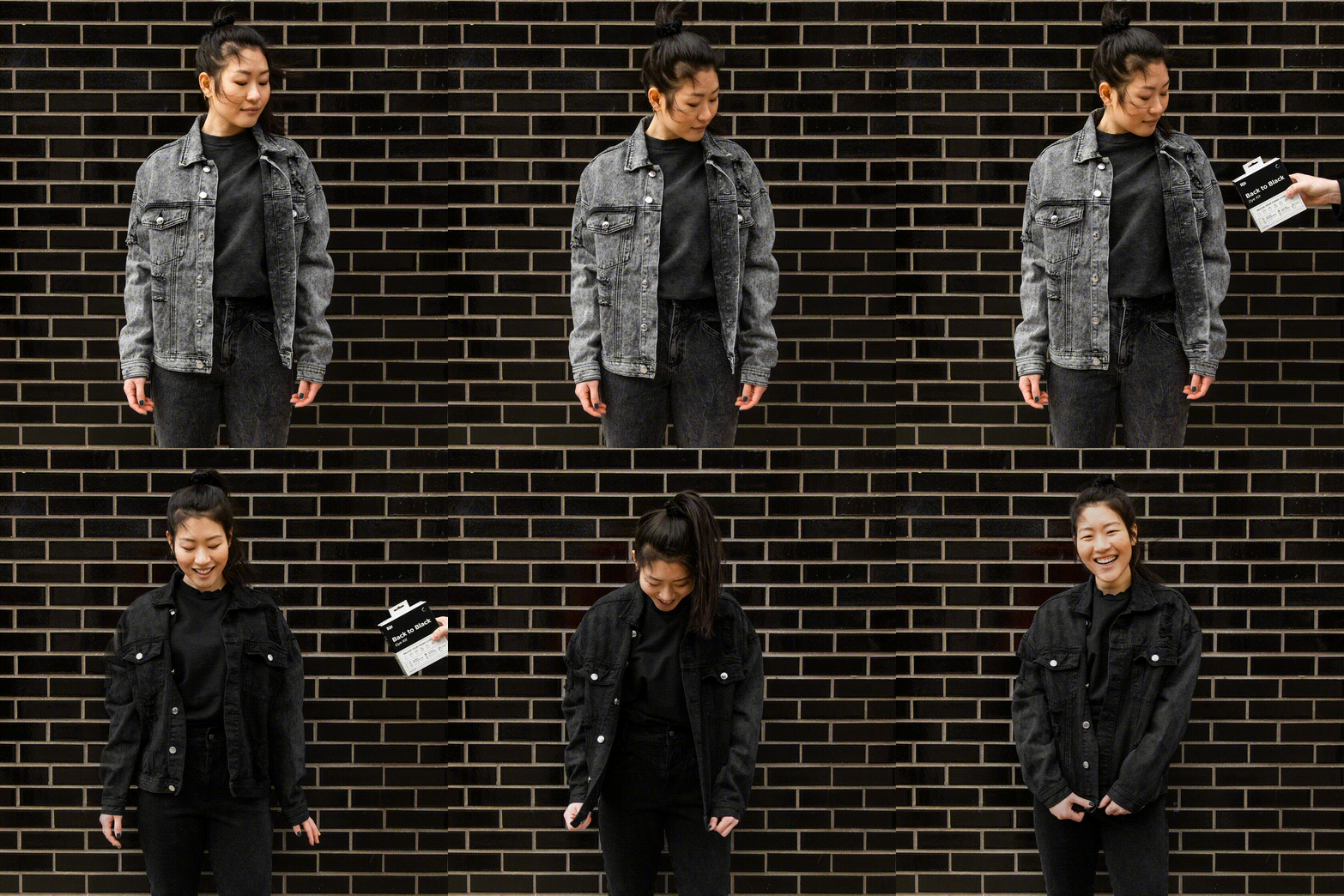
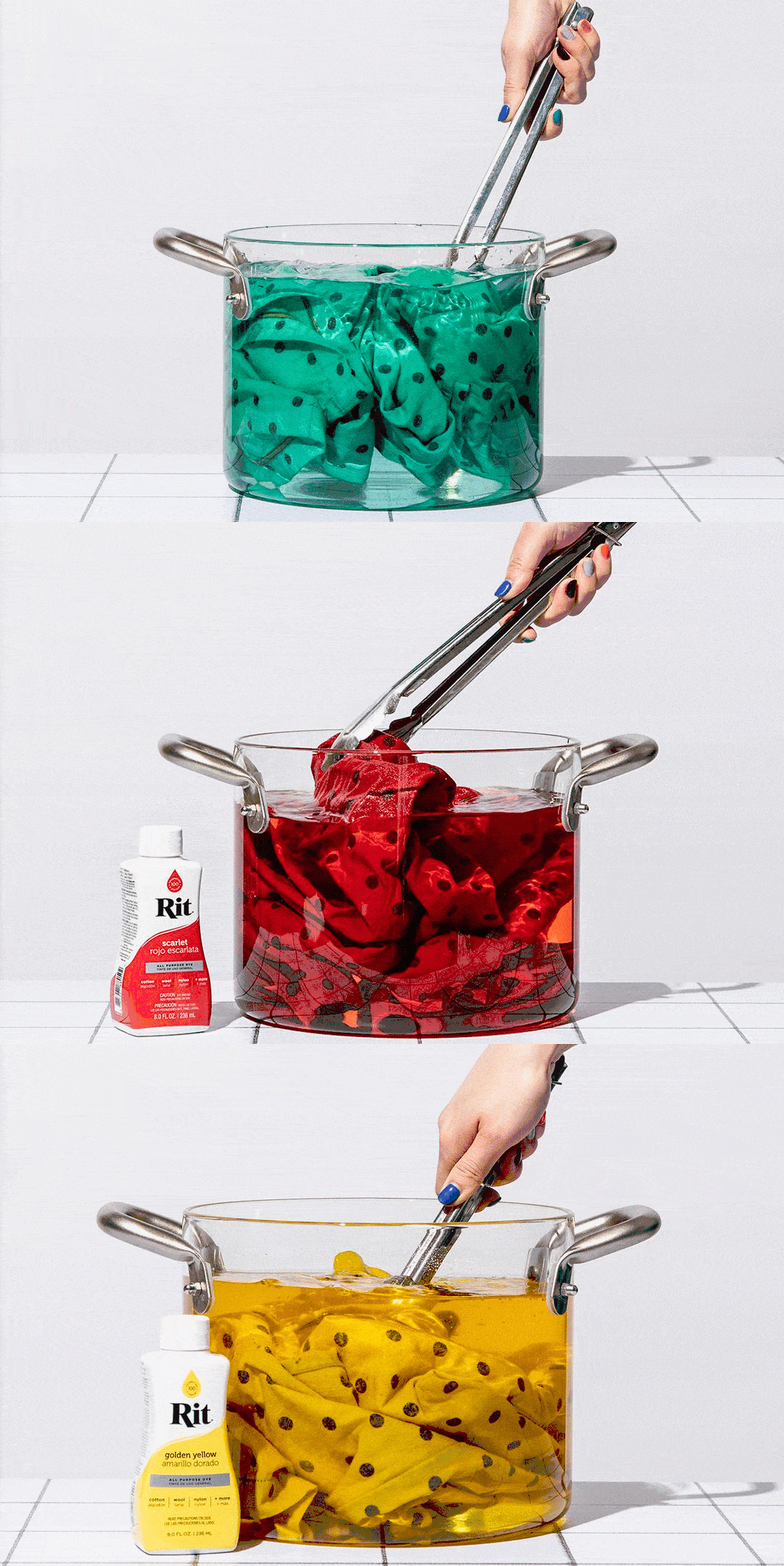
Take a look at this quick overview for dyeing on top of the stove! This is an easy method for dyeing one item, such as a shirt or jeans, and for dyeing black and other dark colors because you can maintain a constant temperature.  Rit loves hot water!

Stove Top Dyeing Method

1.  Know your fabrics -- Rit is a user-friendly dye that will color most fabrics (cotton, linen, rayon, silk, wool, nylon and blends of at least 60% cotton), but it will not dye 100% polyester, acrylic, acetate or fabrics with special finishes or a rubber backing.  Check your label for the fiber content. 

Photo: This shirt was a blend of fibers, which is why the body of the shirt is lighter than the 100% cotton lace. The thread was polyester and did not take the dye.  The overall design effect is fun! 

2. To determine how much dye to use, weigh the item.  If possible, use a food scale.  If you don’t have one, then estimate.  1 box of powder or ½ bottle (1/2 cup) of liquid dye will color 16 ounces (one pound) of dry weight fabric.  One pound of fabric is about 3 yards of cotton broadcloth, 1 bath towel or 4 medium size ladies’ T-shirts. 

Note: This top weighed 4 ounces so 2 Tablespoons of liquid dye is enough for a medium shade. However, for dark or bright colors, you can double the amount of dye.   (Liquid dye is more concentrated than the powder.  If you prefer to use powder, use twice as much dye.)   

3.  Always pre-wash whatever you are dyeing to remove any finishes that may interfere with the dye process.  Or, if you want to change the color of an item, use Rit Color Remover following the package instructions before dyeing. 

4.  Select a cook pot that will hold 2 to 3 gallons of water and allow the item to move freely.  Fill pot with hot tap water.    

5.  To prepare dye, put on your rubber gloves.  Shake dye bottles.  Measure 2 Tablespoons Royal Blue liquid dye and add to water.  Then add 1/2 cup of salt; stir well.  For larger items,  add 1 cup salt.  Add squirt of liquid detergent.  The detergent helps the dye to move onto the fabric. 

Note: Salt is used with cotton, linen and rayon fabrics to achieve more intense, bright colors.  If you’re dyeing nylon, silk or wool, then add 1 cup of white vinegar to the dye bath to intensify the color.


6.  At this point you can check the color by dipping a swatch of cotton fabric (or even a paper towel) into the dye bath for a few minutes.  If the color is too dark, you can add more water.  If it is too light, you can add more dye.

7.  Immerse wet item into dye bath and bring water to a simmer at 140F (not boiling).  Stir or move item continuously for 20 - 30 minutes, up to 60 minutes.  The longer the item is in the dye bath, the darker the color will be.  Just remember, fabric appears darker when wet and dries lighter. 

Photo:  Here’s a comparison of two shirts – the one on the left remained in the dye bath longer than the one right so it’s darker.  Also, the shirt on the left was not stirred continuously so it has some splotchy areas.

8.  Remove top, squeeze out the excess dye and rinse in cool, then gradually warmer water until water begins to run clear.  Then wash in warm water with mild detergent, rinse and dry. 


Tags: How-Tos

Have you ever seen such beautifully colored eggs?  Suzonne Stirling, designer extraordinaire, created these custom color recipes for dyeing eggs with Rit.  Keep in mind that Rit is not food safe, so Suzonne blew out the eggs with an egg blower, which means they can be used for Easter decorating in years to come!  Take a look at her awesome recipes.

Tags: How-Tos

Here’s a fun last-minute Easter T-shirt you can make as a gift for your favorite little girl or your little girl’s teddy bear!  Barb Warholic created this design and transferred it using Elmer’s School Gel (the blue one) as a resist.  Then the shirt was dyed in a mix of Lemon Yellow and Aquamarine to create an Easter green!  The lettering and design remained white.

To make the pattern, Barb printed a “Some Bunny Loves Me” design on the paper side of freezer paper.  Be sure to reverse your image so when the freezer paper is turned over, the image will read correctly.  Then insert the freezer paper, waxed side up, inside the T-shirt and hold it in place with clamps.  Using the Elmer’s School Glue Gel and starting at the top of the shirt, trace the first two words.  Then trace and fill in the bunny, except for the inner ears and heart.  Just trace around these shapes. They will be filled in later. Then trace the last two words. The freezer paper not only gives you the pattern, but it keeps the glue from soaking through the T-shirt.  Let the glue dry overnight. 

To make the pink inner ears and heart, Barb mixed a drop of Fuchsia dye with the Elmer’s School Glue Gel and painted in those areas.  The Fuchsia dye will color the fabric and remain there.  Let it dry completely.  Then she dyed the white shirt in a mixture of Lemon Yellow and Aquamarine.  The glue acts as resist and creates a batik-like design on the shirt!  Click here for the full tutorial.

Barbara Warholic is a designer and author of Sewing Pottery By Machine, published by Martingale. She loves incorporating Rit dye into her work.  Visit her blog at www.softpottery.blogspot.comand her Dyeing Textiles board on www.pinterest.


Tags: How-Tos