Yes! You can find them under the “Rit Collections” dropdown on our color recipes page. Select “Vintage Colors.”

Colors
-
Do you have recipes for Rit colors that have been discontinued?
-
Can I change the color of a garment by overdyeing it with a new dye color?
If the garment you are planning to dye has a light color and you are looking to dye it a darker color, then all we recommend doing is following the standard instructions for how to use Rit All-Purpose Dye (if dyeing cotton, linen, silk, wool, nylon, ramie or rayon) or Rit DyeMore (if dyeing garments that have more than 35% polyester, acrylic or acetate). If you are looking to: (a) dye a dark garment a lighter color or (b) completely change the color of a garment from one color to another (such as from purple to blue), then follow our instructions on how to change the color of a garment.
-
What special dyeing techniques should be used to achieve rich, dark color, such as black or navy?
We have an entire page dedicated to helping you get as rich of a color as possible. You can find it here. However, the key three things are: (1) use the stovetop method, (2) double the dye quantity and (3) use Rit ColorStay Dye Fixative after dyeing (but before washing).
-
When overdyeing another color with black, why do I have to add an additional color?
Our dyes are created based on the premise that they will dye white or light colored fabric the color of the dye. So when our Black or Graphite dye is applied to a colored fabric, the original color of the fabric may still show through. To address this, we recommend adding an additional color (per our chart here) to counteract the undertones of the existing color. As an example, if you were dyeing red fabric, we would recommend adding some green dye to your dyebath. Since mixing red and green makes black, adding a green dye to your dyebath will counteract the red on the fabric.
-
Can I dye a black garment to white?
Unfortunately, we do not sell a white dye. However, if the garment you are wanting to dye is a natural fabric (such as cotton, linen, silk, wool or ramie), then you can remove the black color using Rit Color Remover. This will bring the garment to a white or off-white color. Then, launder it with Rit Whitener Brightener to lighten the color. Unfortunately, if your garment has more than 35% synthetic material (such as polyester, acrylic or acetate), then you cannot remove or whiten the color on the garment.
-
Can colored or printed fabrics be dyed?
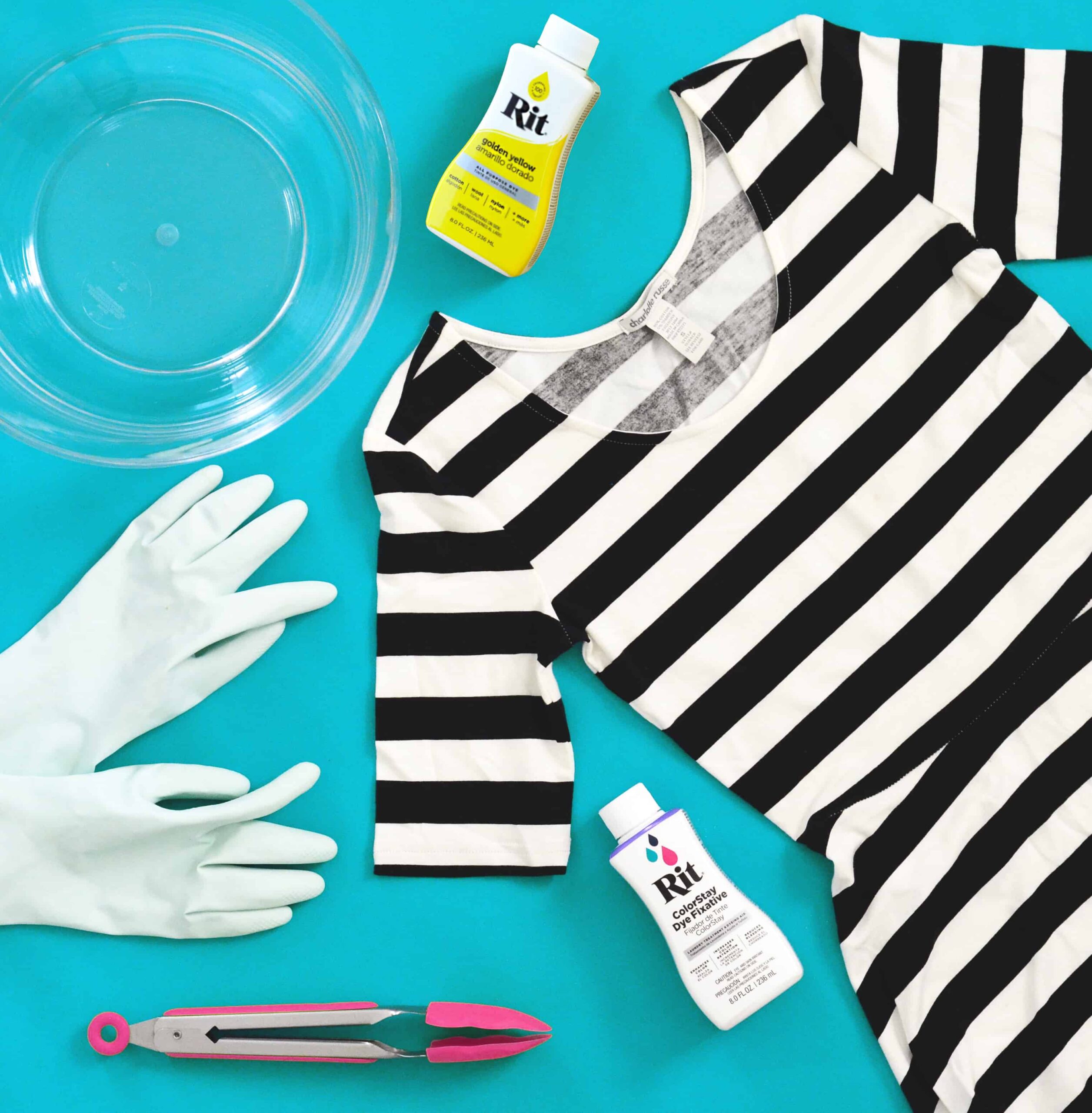
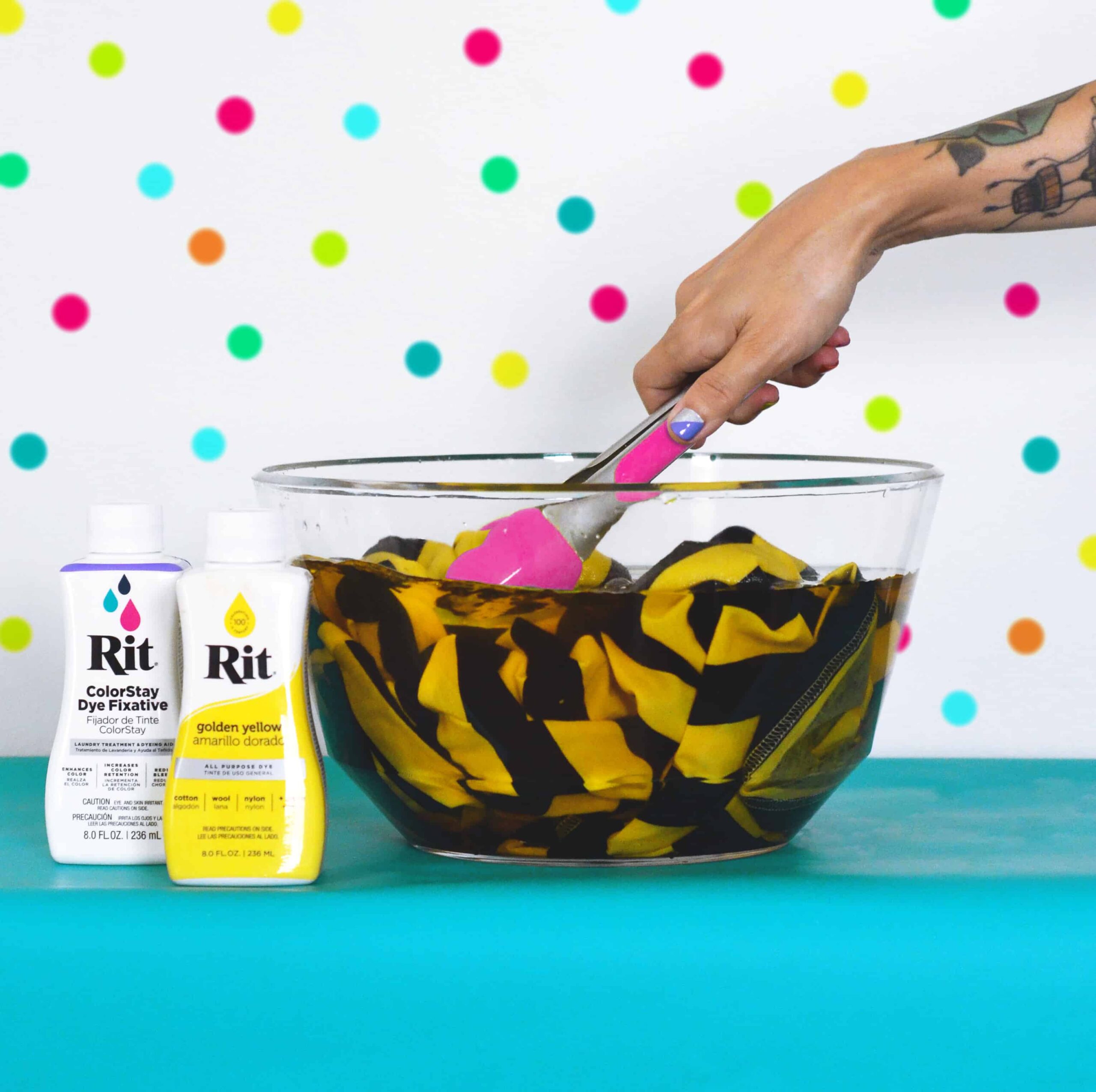
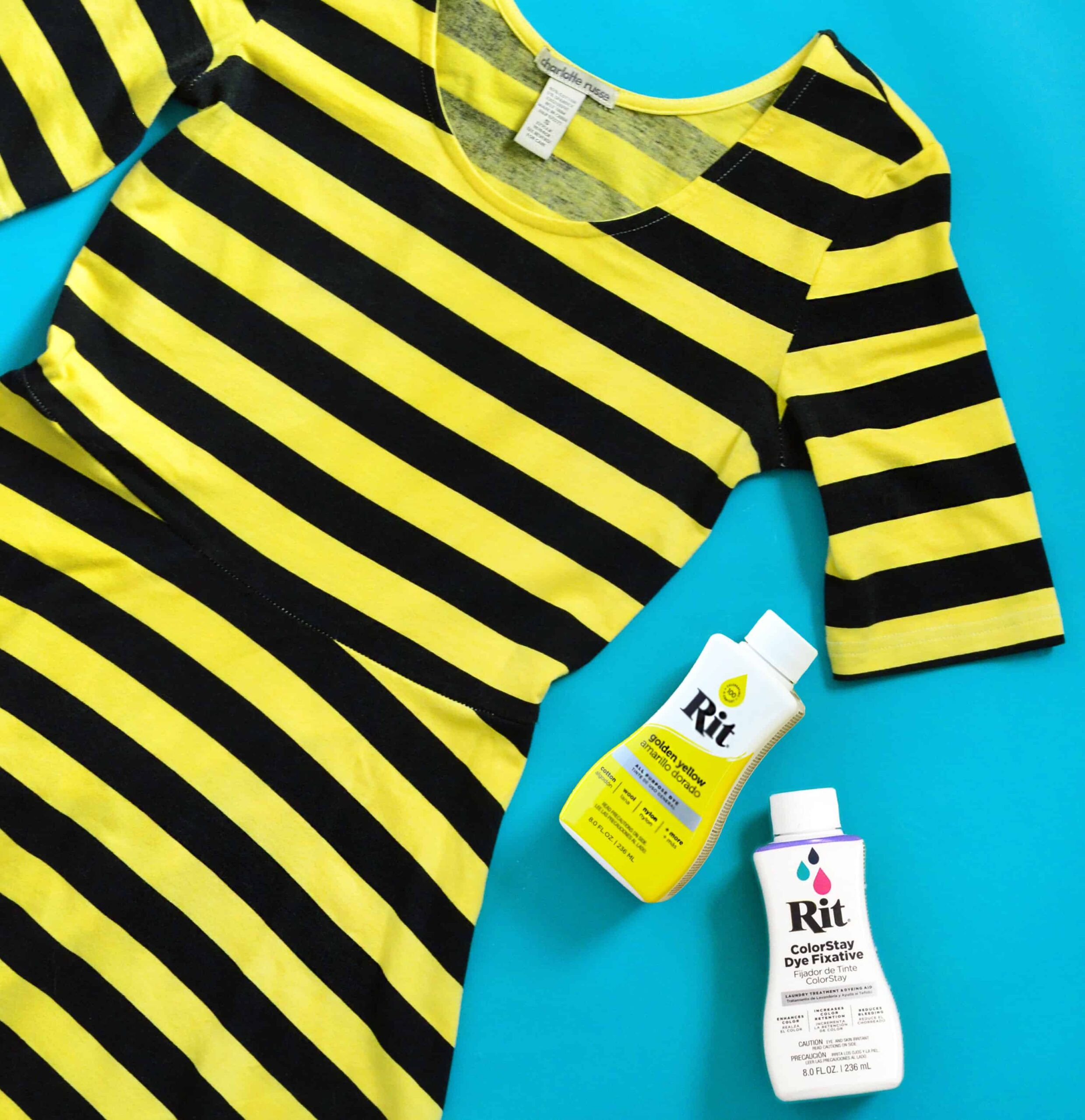
Yes, colored and printed fabrics can be dyed. It’s a method called overdyeing.
If the garment you are planning to dye has a light solid color and you are looking to dye it a darker color, then all we recommend doing is following the standard instructions for how to use Rit All-Purpose Dye (if dyeing cotton, linen, silk, wool, nylon, ramie or rayon) or Rit DyeMore (if dyeing garments that have more than 35% polyester, acrylic or acetate). If you are looking to: (a) dye a dark solid garment a lighter color or (b) completely change the color of a garment from one solid color to another (such as from purple to blue), then follow our instructions on how to change the color of a garment.
If you are dyeing something with a print or logo, the color chosen for overdyeing will mix with the existing color(s) in the fabric and create new colors. In other words, the rules of color mixing apply. When selecting a color, think about how it will mix with the colors in the pattern. For example, if you were to dye an item that has a pink flower pattern with a blue dye, the pink flowers will turn purplish (blue and pink make purple) while the rest of the fabric will dye blue. Even if you were to overdye the patterned garment with a dark color, you may find that the color will appear lighter along the patterned area.